Safer, resilient public infrastructure for Pakistan.
Across four provinces of Pakistan, KnK Japan delivers the World Bank's Comprehensive School Safety Framework — from assessment through retrofitting and reconstruction — transforming vulnerable public schools, health facilities, and community infrastructure into resilient assets that protect lives and sustain essential services during and after disasters.
More than two decades. Hundreds of safer buildings.
Since 2005, KnK Japan has delivered safer, resilient public infrastructure across four provinces — schools, health units and WASH facilities engineered to international standards.
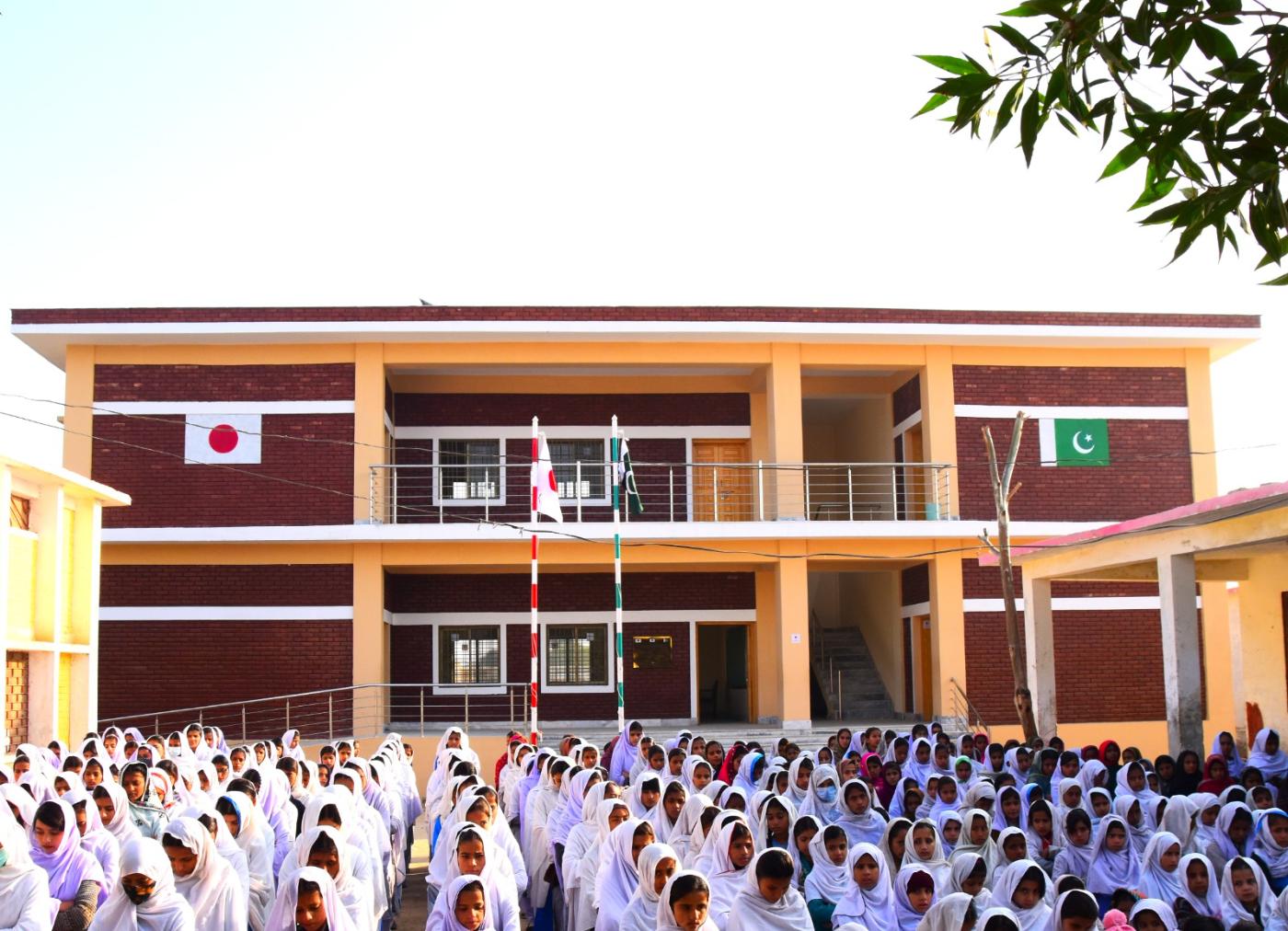
A full school, back at morning assembly.
Where the 2022 super-floods closed classrooms, KnK Japan-rebuilt schools have reopened — engineered to BCP-2021, FEMA and ASCE, raised against floodwater and powered by rooftop solar, so a girl's education doesn't end when the next disaster arrives.
When the water rose, the classroom was the first thing it took.
The 2022 super-floods submerged a third of Pakistan and destroyed thousands of schools and health facilities. In Balochistan — already last in the country for girls' education — the loss was generational.
Most public buildings here were unreinforced masonry, built on grade with no defence against floods, earthquakes or 50°C heat. When they failed, girls simply stopped coming. Rebuilding them the same way would only invite the next disaster.
One framework. Three pillars. Field-tested across Pakistan.
KnK Japan delivers the Comprehensive School Safety (CSS) Framework end-to-end — the globally recognised resilience model championed by UNESCO, UNICEF, the World Bank and GADRRRES. Beyond schools, the same three-pillar approach is applied to health facilities, WASH systems and public infrastructure.
Safe Learning Facilities
Evidence-based site selection, multi-hazard structural assessment, and retrofit or full reconstruction to BCP-2021, ASCE and FEMA — with green materials, solar and inclusive WASH.
- SHA-led, evidence-based decisions
- Seismic-resilient ductile RC frames
- Flood-resilient piles + elevated plinth
- 4-hazard RVS framework
- Retrofit or full reconstruction
- Inclusive WASH, ramps & MHM
School Disaster Management
Trained safety committees, disaster-management plans, evacuation routes and mock drills, linked to PDMA/DDMA and backed by community-based digital monitoring after landfall.
- School Safety Committees
- School Disaster Management Plans
- Mock drills & evacuation routes
- PDMA / DDMA linkages
- Community-based monitoring
- Digital SHA tool
Risk Reduction & Resilience Education
Disaster-risk reduction and climate awareness woven into school life — safety clubs, teacher and PTSMC capacity building, girls' safety and MHM, and schools as community resilience hubs.
- DRR in school activities
- Student safety clubs
- Teacher & PTSMC orientation
- Girls' safety & MHM awareness
- Inclusive WASH & hygiene training
- Schools as resilience hubs
We don't guess which buildings are safe. We score them.
Before a single brick is laid, every structure is put through a Structural Health Assessment (SHA) built on the same codes used worldwide — so the decision to retrofit or rebuild is evidence, not opinion.
Rapid Visual Screening
FEMA P-154 scores each building against the area's seismic hazard.
Score vs. cut-off
Below the cut-off, the building advances to deeper analysis.
Simplified & detailed SHA
Capacity vs. demand, checked against ASCE 41-17.
The decision
Pakistan sits across seismic zones 3 & 4. Our buildings are designed for it.
Where most KnK Japan schools and health facilities are built — KP, AJK, Gilgit-Baltistan and parts of Balochistan — the design must answer a high to very-high seismic hazard. Schools are classified Risk Category II under BCP-2021, requiring a higher performance objective than ordinary buildings.
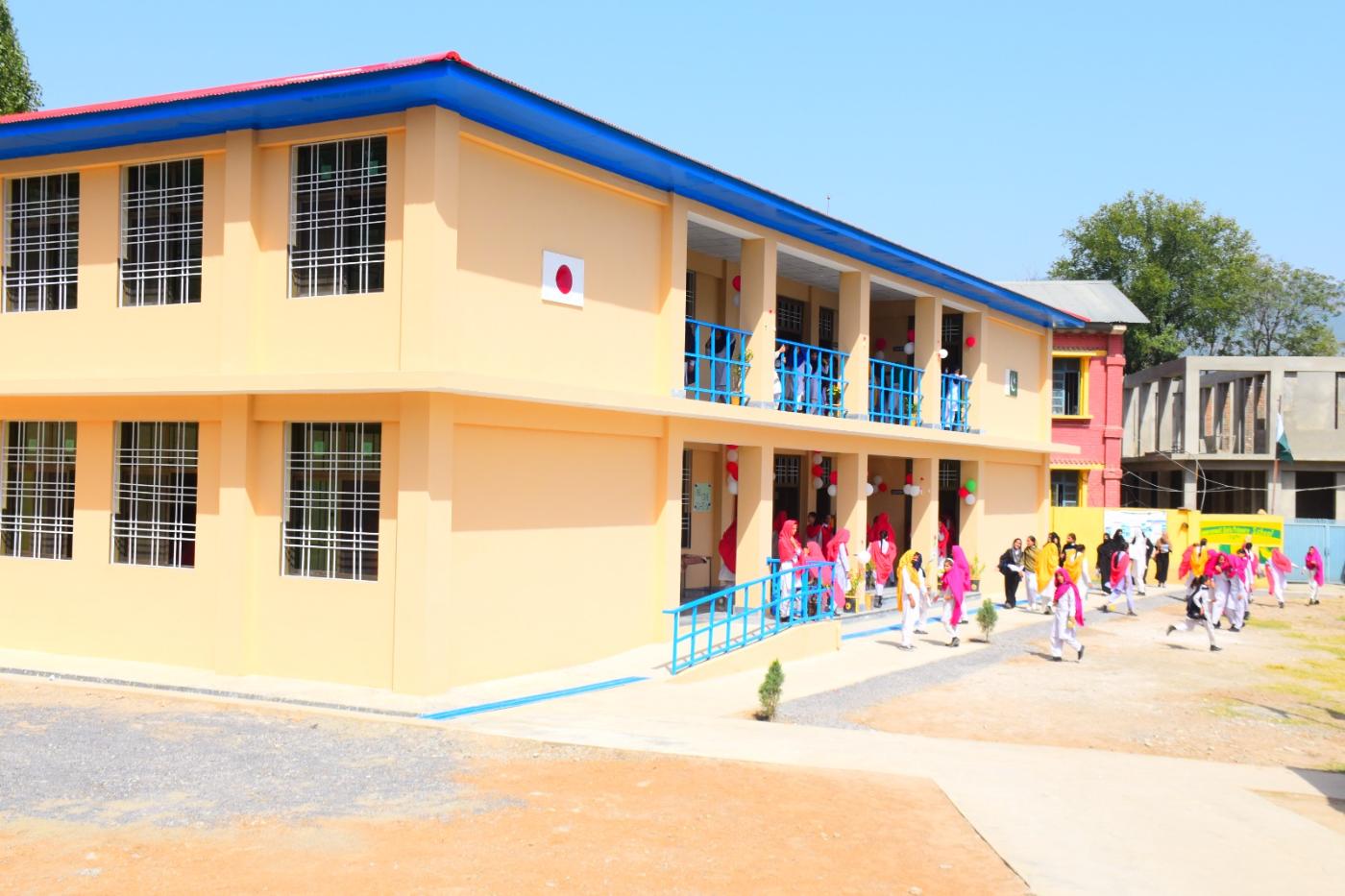
A regular plan and a ductile frame — the seismic response in built form.
Each reconstructed school puts the principles into practice: a regular rectangular plan to minimise torsion, a ductile reinforced-concrete frame with an RC slab diaphragm, and continuous tie beams at every floor — each element sized to the area's design earthquake and verified against ASCE 41-17. The RC frame consistently outperforms the unreinforced masonry and adobe seen in RVS data.
Retrofit where we can, rebuild where we must.
The assessment decides the path. Sometimes a sound shell can be strengthened and lifted; sometimes only a new, deeper-founded structure will do. Two real outcomes from Usta Muhammad:
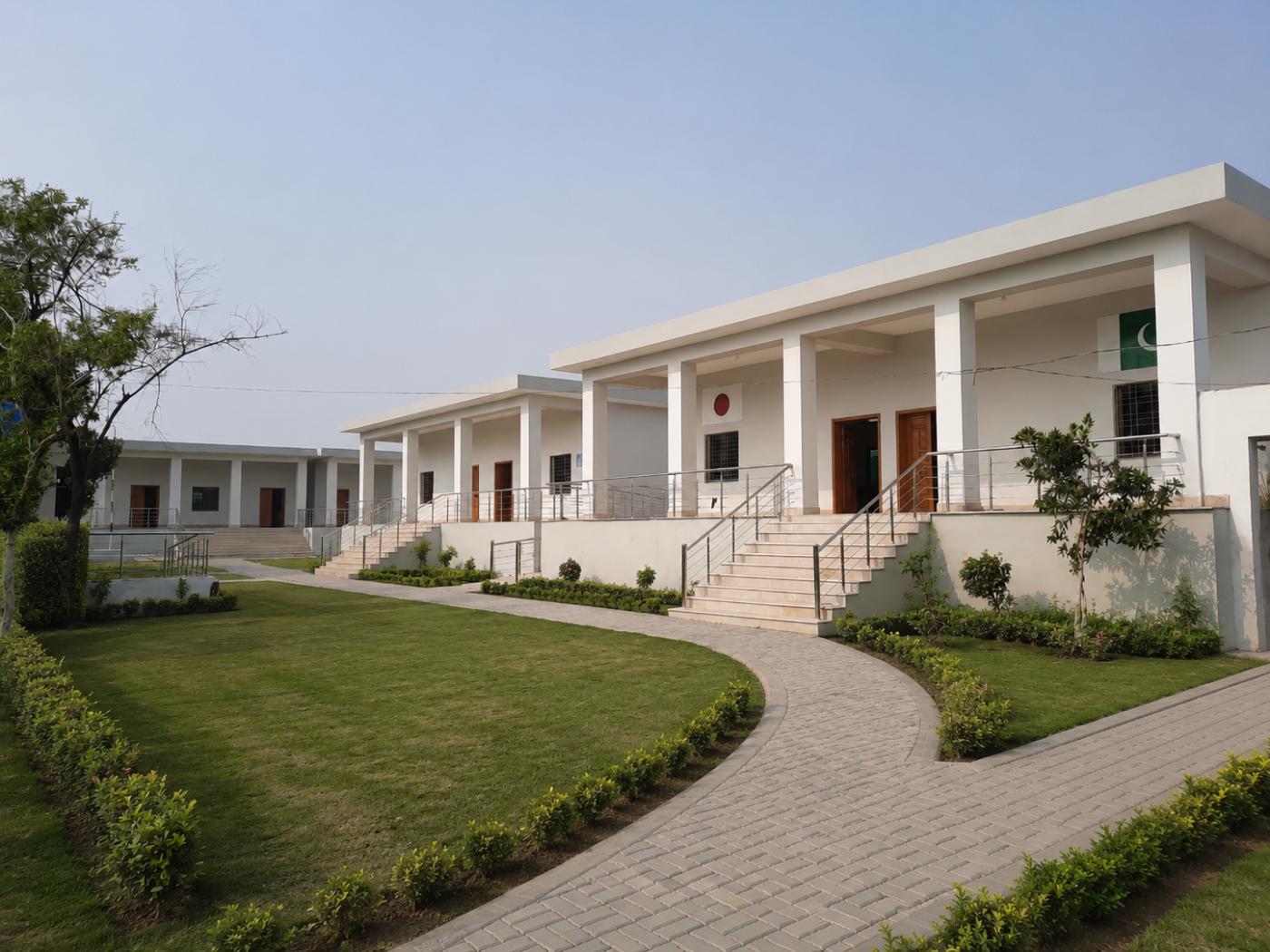 Retrofit
GGHS Rustam Khan Jamali
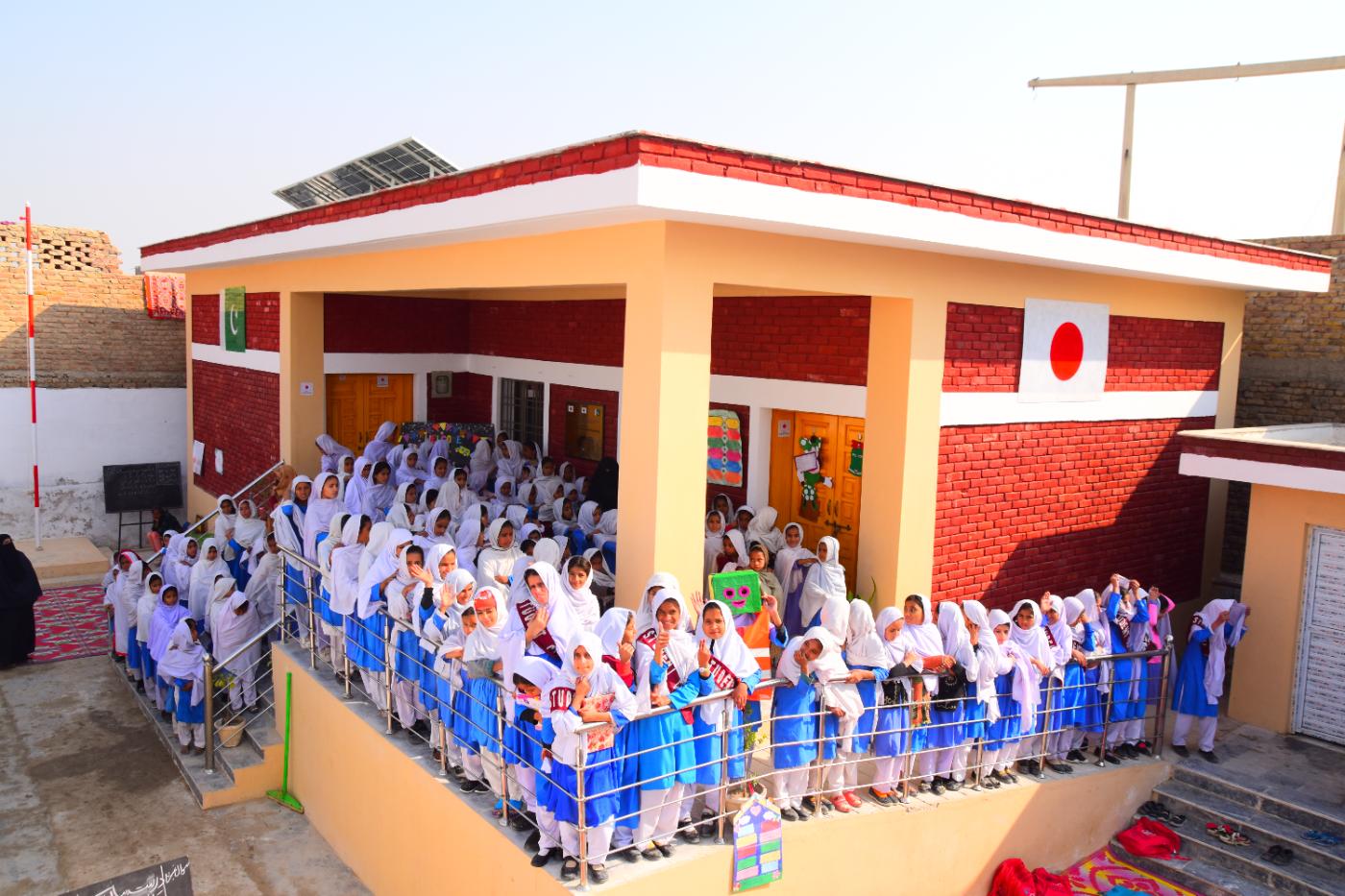
Usta Muhammad · BalochistanA central girls' school damaged in 2022. Rather than demolish a salvageable structure, we strengthened its walls and columns with added concrete and reinforcement, raised the building against future floods, added thermal-comfort features and rehabilitated WASH — restoring 7 classrooms.
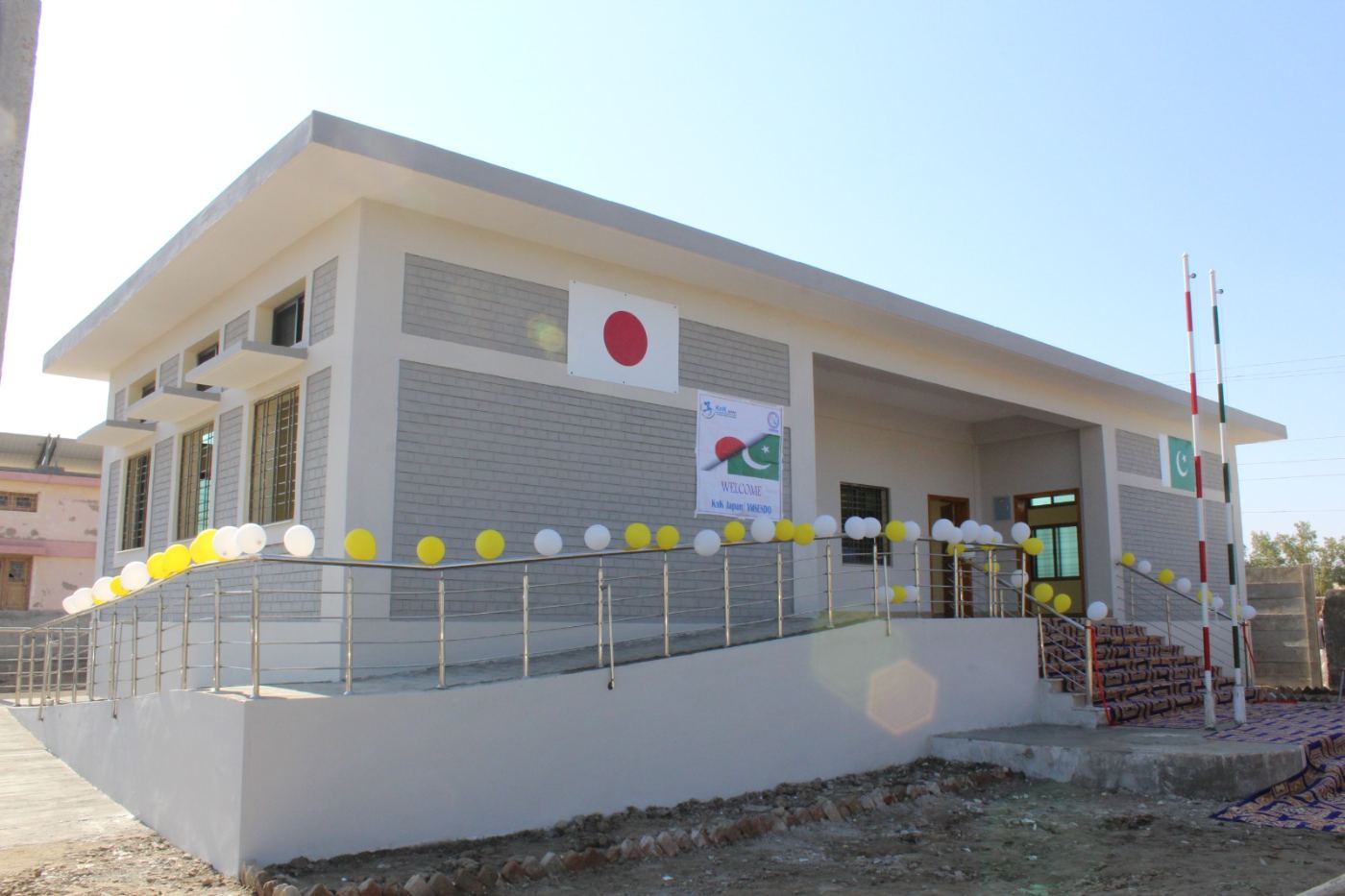 Reconstruct
GGHS Gandakha & the BHU
Usta Muhammad · BalochistanWhere the 2022 floods left only rubble, we rebuilt from the ground up — pile foundations, an elevated plinth, a seismic-detailed frame and fly-ash brick. The same approach rebuilt the area's destroyed Basic Health Unit, restoring healthcare on a raised, ramp accessible, solar-powered site.
Three deployment tiers for any timeline, terrain or budget.
Where timelines are tight, access is limited, or a permanent build is not yet feasible, KnK Japan delivers cost-effective public infrastructure using engineered lightweight and prefab systems — with performance and safety expectations matching permanent construction.
Semi-permanent steel
Accessible / urban districts. Durable & expandable.
- Deployment
- 2–3 weeks
- Lifespan
- 10–15 years
- Foundation
- RCC footings
- Panels
- 50 mm PUF / EPS
Light-weight prefab steel
Rural / moderate-access sites. Fast, moderate cost.
- Deployment
- 5–7 days
- Lifespan
- 7–10 years
- Foundation
- Strip / block footing
- Panels
- 40 mm PIR / EPS
Extra-light prefab steel
Remote / emergency. Fastest; relocatable.
- Deployment
- 1–3 days
- Lifespan
- 5–7 years
- Foundation
- Minimal pads
- Panels
- 25 mm EPS
A safe shell is only the start.
Resilience is the sum of many systems — energy, water, materials, ecology and people — designed to keep services running through, and after, a disaster.
Low-carbon materials
01Fly-ash brick replaces burnt clay across every reconstruction — stronger, more uniform and far lower in embodied carbon. Sulphate resistant and eco-cement guard against aggressive ground conditions.
Clean energy
02Rooftop solar at every site powers lights, fans and pumps, cutting grid reliance and keeping classrooms and clinics running when power fails.
Integrated WASH & MHM
03Clean water, handwashing stations and gender-separated toilets, plus menstrual-hygiene support, keep girls in school with health and dignity.
Thermal-resilient comfort
04Shaded openings, sun-hoods and high-mass walls hold off extreme heat, so learning continues through 50°C summers without mechanical cooling.
Green infrastructure
05Tree-planting and green spaces, green indigenous material, shade-giving species per EPA guidance cool the grounds, curb flood risk and teach environmental stewardship.
Service continuity
06Raised, solar-backed buildings with on-site water keep schools and health units working during and immediately after a disaster.
Inclusive & accessible
07Ramps, accessible sanitation and ground-floor access are standard, welcoming students and patients with disabilities.
Digital & monitoring
08ICT-supported teaching, digital assessment proformas and online awareness campaigns extend reach and sharpen the evidence base.
Quality-assured build
09Construction materials are independently tested in accredited university laboratories — verifying that what is specified is what gets built.
School Disaster Management
Every safer school is also a managed school. Hardware is matched by trained people and rehearsed plans.
School Safety Committees
Teachers, PTSMC members and custodians trained with clearly assigned roles for early warning, evacuation and service continuity.
School Disaster Management Plans
A plan for every reconstructed or retrofitted school — evacuation maps, role cards and a maintenance schedule kept on file.
Mock drills & evacuation routes
Drills run regularly with students; assembly points and routes are physically marked on the building and grounds.
PDMA / DDMA system links
Protocols connect each safer school to provincial and district disaster-management authorities from day one.
Community-based monitoring
Post-construction monitoring is run by community focal persons; defects are reported through a simple digital tool and tracked to closure.
Digital SHA tool
KnK Japan's digital structural-health-assessment tool is under development for evidence-based decisions at national scale.
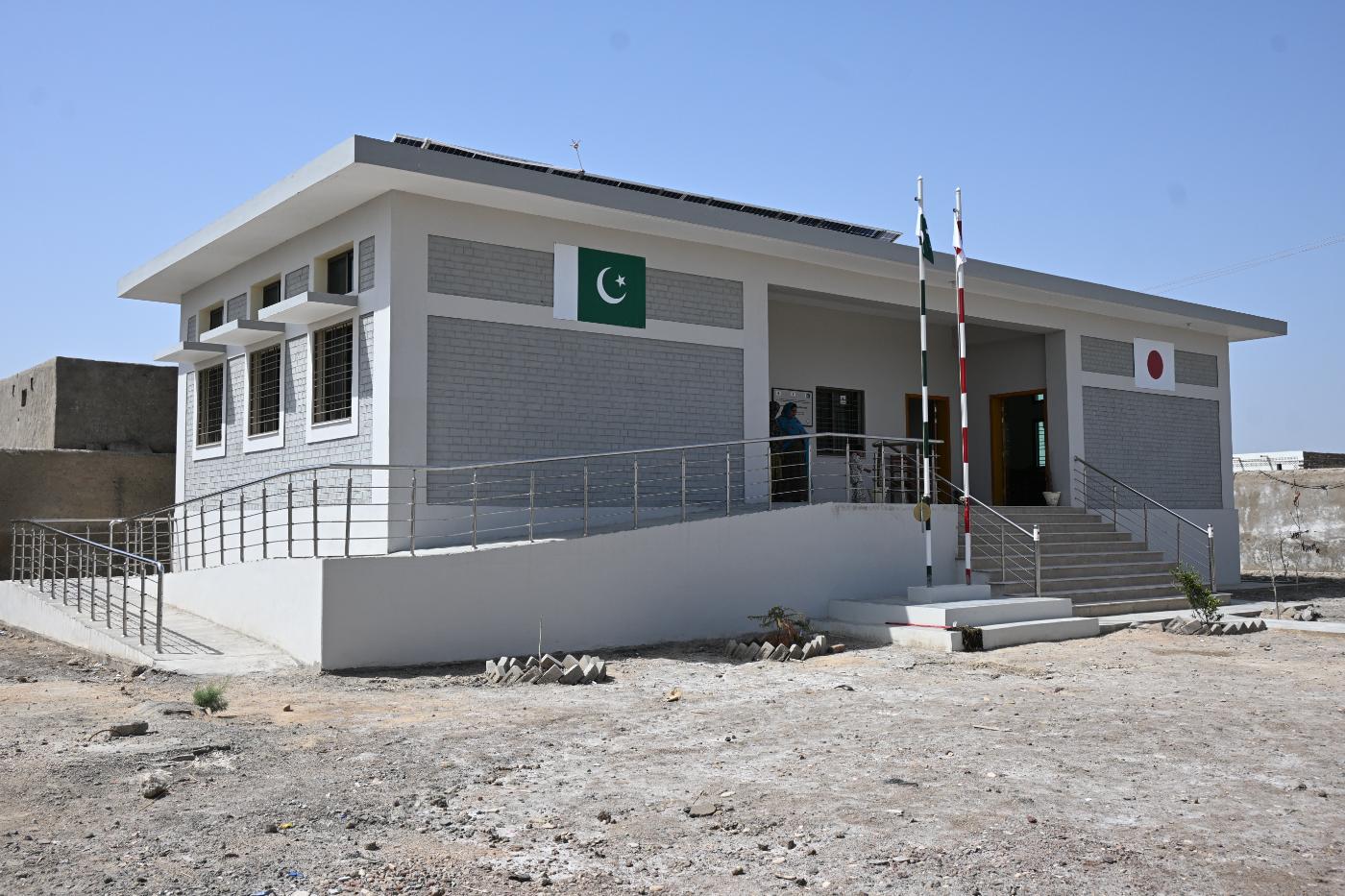
The same standard, applied to public infrastructure and healthcare facilities.
Reconstructed Basic Health Units bring resilient, ramp-accessible, solar-powered care back to flood-hit communities — built by KnK Japan.
Risk Reduction & Resilience Education
A safer building is the start. A safety-literate community is the goal.
DRR in school activities
Disaster-risk reduction and climate awareness are embedded in co-curricular activities, assemblies and morning announcements.
Student safety clubs
Student-led clubs are trained in basic first aid, fire response and early warning, and lead awareness drives in the community.
Teacher & PTSMC orientation
Teachers and Parent-Teacher/SMC members are oriented in school safety and how to operate the disaster-management plan.
Girls' safety & MHM awareness
Menstrual-hygiene management and inclusive WASH training address some of the most-cited reasons girls drop out.
Schools as resilience hubs
As the most-engineered building in the community, a KnK school doubles as an evacuation shelter and continuity centre.
Climate-smart design as a living example
Solar arrays, water tanks, flood markers and ramps make each school a teaching tool that normalises resilient thinking.
Resilient buildings, resilient communities.
Hardware alone doesn't keep a school open or a health unit running. KnK Japan invests just as deeply in the engineers, teachers, committees and students who steward these buildings through the next climate shock.
Field-tested. Nationally endorsed. Globally aligned.
KnK Japan's approach has been independently recognised, adopted and replicated by donors, government regulators and international development partners.
GIZ Challenge Fund — CD-CRI
Selected in the top 5 of 520 organisations in the GIZ Climate-Disaster & Climate-Resilient Infrastructure Challenge Fund for an integrated, evidence-based approach.
Adopted as standard
The Pakistan Engineering Council and the National Disaster Risk Management Fund are adopting KnK Japan's SHA methodology as their working tool for structural decisions.
Comprehensive School Safety
Delivery across all three pillars of the World Bank's Comprehensive School Safety framework — the global model backed by UNESCO, UNICEF and GADRRRES.
Internationally certified
ISO 9001:2015 Quality Management and ISO 26000 Social Responsibility Guidance — independently audited and current.
Standing today, across Pakistan.
KnK Japan sites — BHUs, schools, WASH blocks — and the students & communities who keep them alive.
Bring safer, resilient public infrastructure to your district.
Whether you are a government partner, a donor, a developer or a researcher — KnK Japan's CSS aligned model is field tested, code compliant and ready to scale. We'd be glad to discuss your context.