Capacity Development for Climate-Resilient Infrastructure
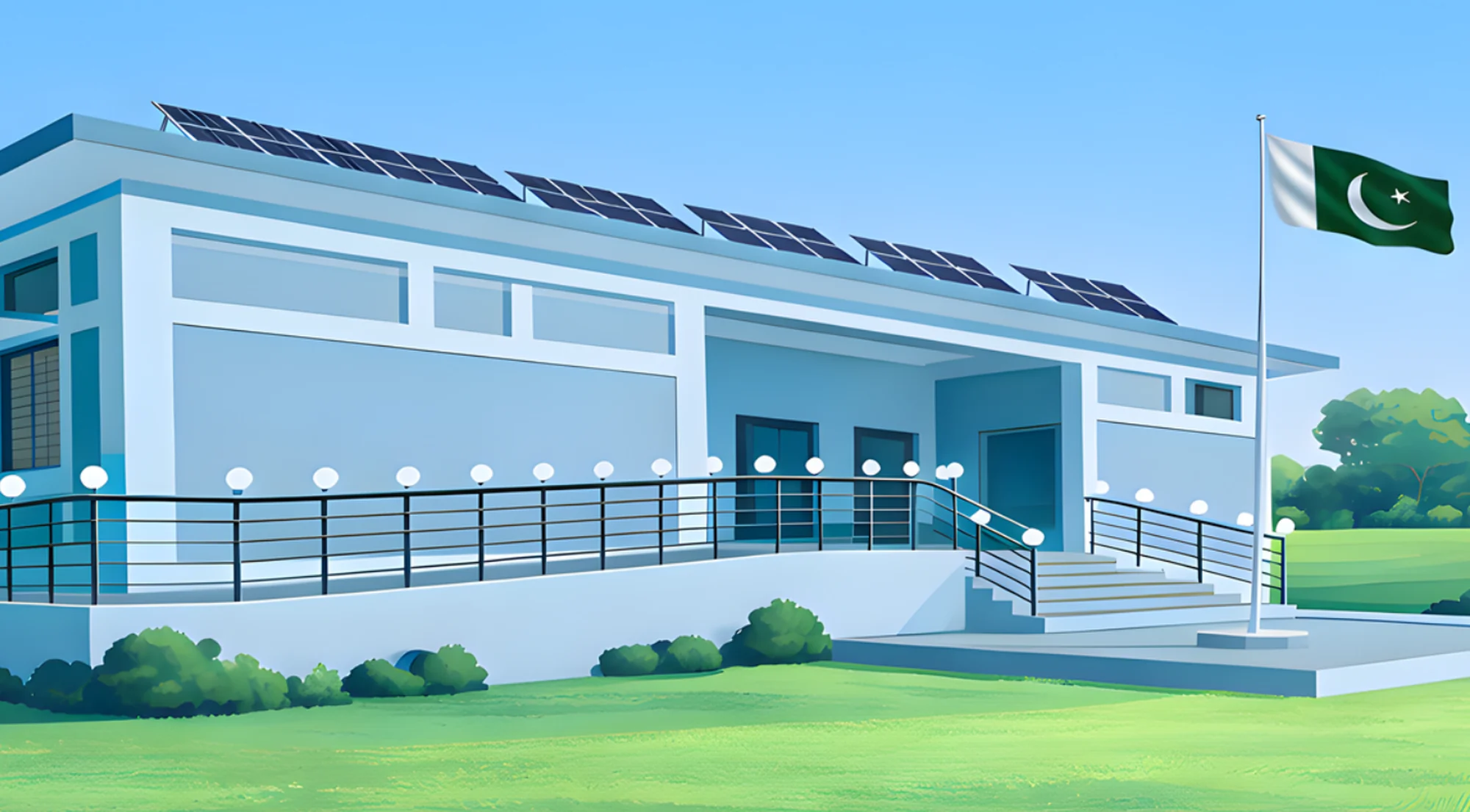
CD-CRI strengthens Pakistan's ability to plan, assess and build public schools and health facilities that withstand earthquakes, floods and a changing climate.
Building Safer Schools and Health Facilities for a Climate-Resilient Pakistan
A national initiative to safeguard Pakistan's public schools and health facilities through a unified Structural Health Assessment system, professional training, and community-rooted practice.
Pakistan's public schools and health facilities face growing risks from earthquakes, floods, droughts, heatwaves, and aging infrastructure. Many buildings remain vulnerable due to weak enforcement of building codes, limited technical capacity, and the absence of a standard process for assessing structural and climate-related risks.
CD-CRI, funded by the German Federal Ministry for Economic Cooperation and Development (BMZ) and supported by the Deutsche Gesellschaft für Internationale Zusammenarbeit (GIZ) GmbH, addresses this gap by developing a unified Structural Health Assessment system, supported by a digital platform, practical manuals, and professional training. The project helps engineers, planners, trainers, masons, and artisans identify risks, apply safer construction practices, and support climate-resilient public infrastructure.
CD-CRI is implemented by KnK Japan Pakistan in collaboration with the National Disaster Risk Management Fund, the Pakistan Engineering Council, and key stakeholders working to advance safer, climate-resilient infrastructure across Pakistan.
Project at a Glance
12 schools · 8 health units
280 (incl. 20% women)
Charsadda, Peshawar, Lahore, Muzaffargarh, Multan
Manuals, guides & modules
German Federal Ministry for Economic Cooperation and Development (BMZ)
Four Pillars of Climate-Resilient Infrastructure
CD-CRI is structured around four interlocking pillars — from the assessment framework itself, through the people trained to apply it, to the communities who ultimately benefit.
SHA Framework
A unified Structural Health Assessment methodology and digital platform — aligned with the 2021 Building Code, Green Building Code and ASCE/FEMA-ATC benchmarks.
Capacity Building
Train and certify 20 master trainers, 60 engineers and planners, and 200 skilled construction workers in climate-resilient and DRR-compliant practice.
Climate-Resilient Design
Embed seismic retrofitting, flood-proofing, thermal insulation, low-carbon materials and green infrastructure into how schools and health units are built.
Community & Inclusion
Mainstream gender equality and social inclusion across every activity — at least 20% women in every training cohort, and assessments in equal numbers of girls' and boys' schools.
Events, media & press coverage
Every CD-CRI seminar, orientation and launch in one place — photographs, video and press coverage for the event you select.
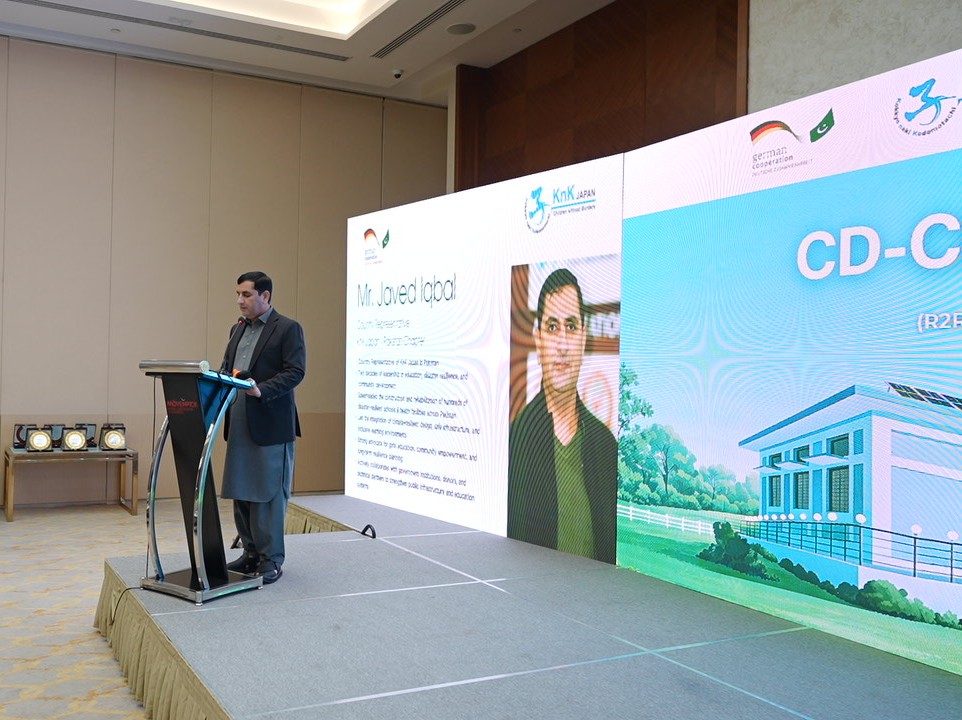 1 / 6CD-CRI national kickoff, Islamabad — photograph 1 of 6
Photo 1 of 6. CD-CRI national kickoff, Islamabad — photograph 1 of 6
CD-CRI National Kickoff — From Risk to Resilience
Coverage of the national consultation convened by KnK Japan Pakistan with GIZ, NDRMF and the Pakistan Engineering Council, setting out the pathway from risk screening to resilient public infrastructure.
What's Coming Next
SHA Mobile Application
The digital field tool for rapid structural and climate-risk screening — used by trained engineers to score and map facility vulnerabilities.
Documents & Reports
The SHA methodology, training manuals, field guides and the eight knowledge products being produced under CD-CRI.
Success Stories
Voices from the field — engineers, masons, head-teachers and community members whose practice has been transformed by the project.
These deliverables are under active development and will be published on this page as they are completed. Check back regularly — or subscribe for updates.
The Conversation Around CD-CRI
The kickoff and ongoing project activities have been amplified across LinkedIn, Facebook and YouTube — by KnK Japan and our partner organizations.
Delivered in Partnership
Connect with KnK Pakistan about CD-CRI
We welcome conversations with stakeholders, government partners, donors and communities interested in resilient public infrastructure. Whether you'd like to collaborate, learn, or share your experience — we'd be glad to hear from you.